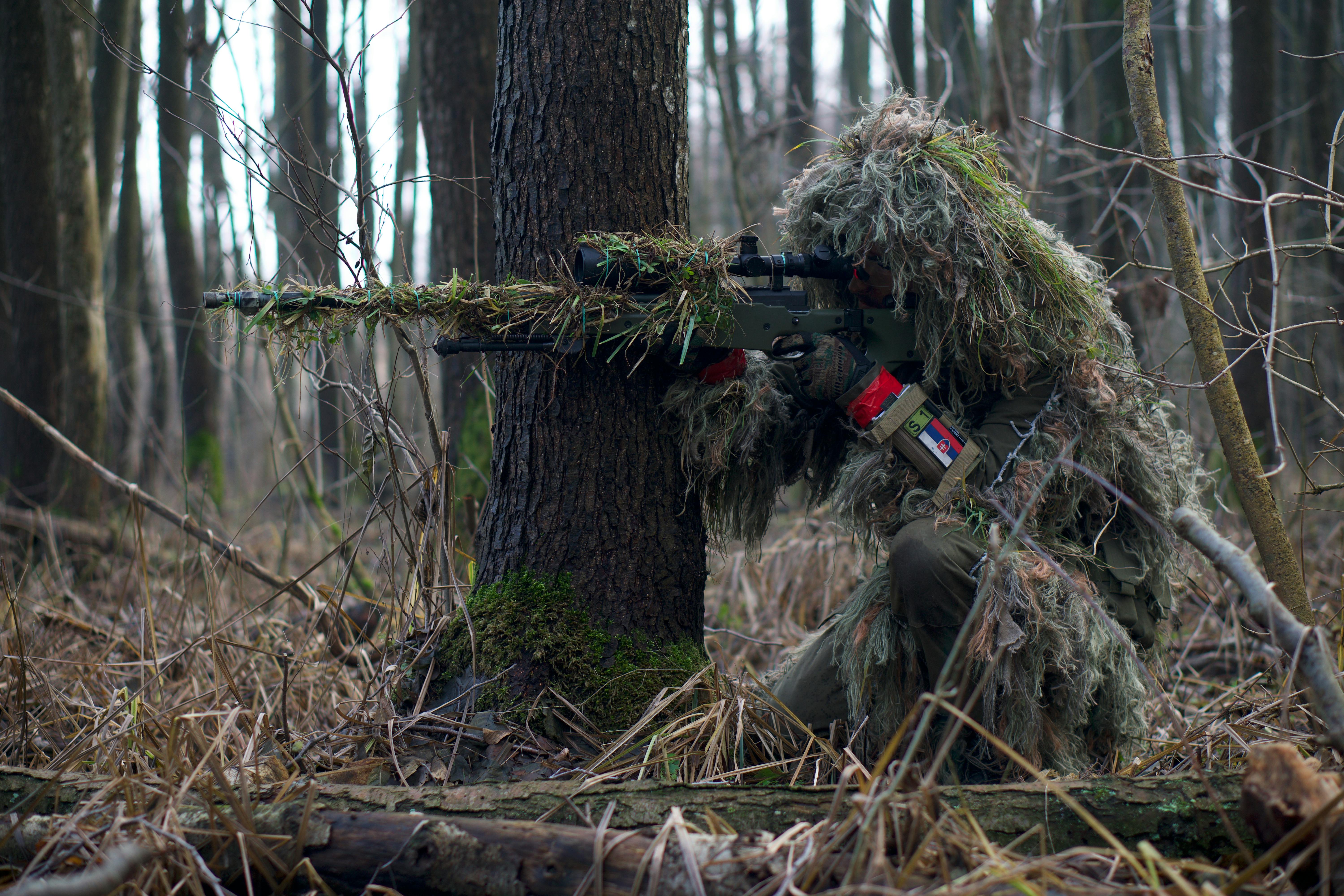
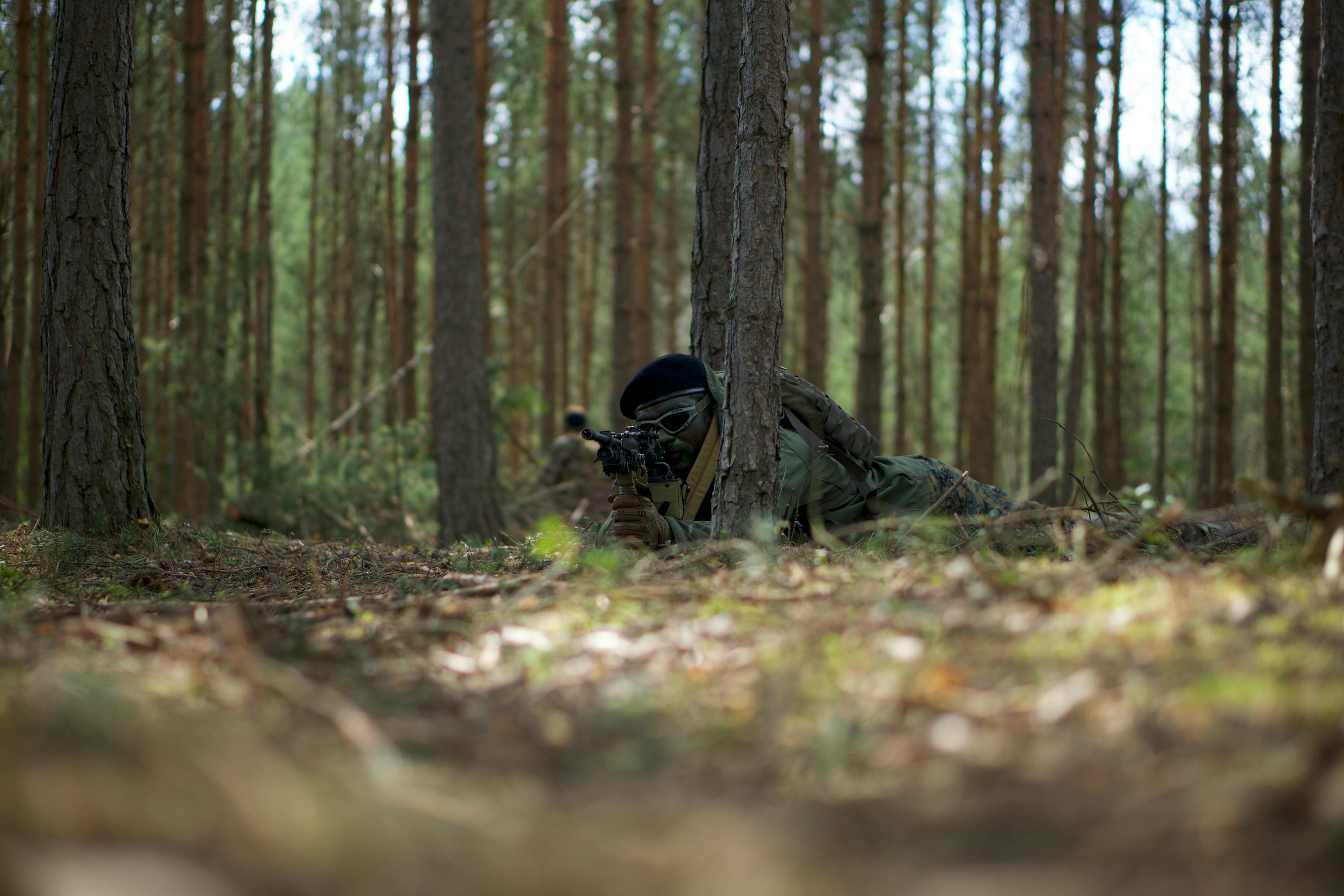
Bonjour, mon amis. I write today with news that must remain hidden from certain members of my European social circle, particularly those in Paris who still believe a weekend in the countryside requires linen trousers, a wicker basket, and an argument about cheese.
I have become interested in American hunting.
Yes, I know how this sounds. My friends in Geneva will imagine I have purchased camouflage trousers, forgotten how to pronounce foie gras, and begun posing beside dead animals while making vulgar hand gestures. Six months ago, I would have imagined much the same thing.
Then an American business associate invited me on a hunt. He was important enough that refusing would have created an inconvenience, so I agreed while privately preparing myself for boredom, discomfort, and the moral irritation of watching grown men shout at wildlife.
Instead, I discovered patience.
The Hunting Rifle Was Not What I Expected
My first surprise came when my host handed me the rifle. I expected a crude and noisy instrument, useful in the same way a shovel is useful and possessed of roughly the same aesthetic sophistication.
What I received felt more like a Swiss watch built around controlled violence. The action moved with mechanical confidence, the stock settled naturally against the shoulder, and every adjustment appeared to exist for a specific reason.
Americans, I learned, do not simply purchase a hunting rifle. The knowledgeable ones configure a system for a particular animal, landscape, and distance.
A .308 Winchester suited to deer at moderate range is not automatically the same choice one would make for antelope across open country. A 6.5 Creedmoor may make sense when distance and manageable recoil matter, while a .300 Winchester Magnum may be preferred when pursuing larger game in mountain terrain.
Even the barrel length reflects the intended environment. A compact rifle is easier to carry through thick timber, while a longer barrel may help preserve velocity where the landscape opens and the shot stretches farther.
The stock, trigger, optic, and supporting equipment all follow the same philosophy. Each choice is made according to how the rifle will be carried, positioned, and fired.
This was language I understood. I have spent my life appreciating bespoke tailoring, custom watchmaking, hand-built automobiles, and any object created around the preferences of its owner rather than the laziness of a factory average.
I had dismissed the Americans as gun-obsessed. To my irritation, some of them were practicing a form of applied craftsmanship I already respected everywhere else.
The Mathematics Behind The Shot
My second surprise was discovering that long-range marksmanship is not simply pointing and pulling. This had been my assumption, and like many of my assumptions about America, it was delivered with confidence rather than evidence.
At longer distances, the bullet does not travel through some obedient tunnel toward the target. Gravity acts upon it, wind moves it, and the surrounding air changes how efficiently it carries velocity.
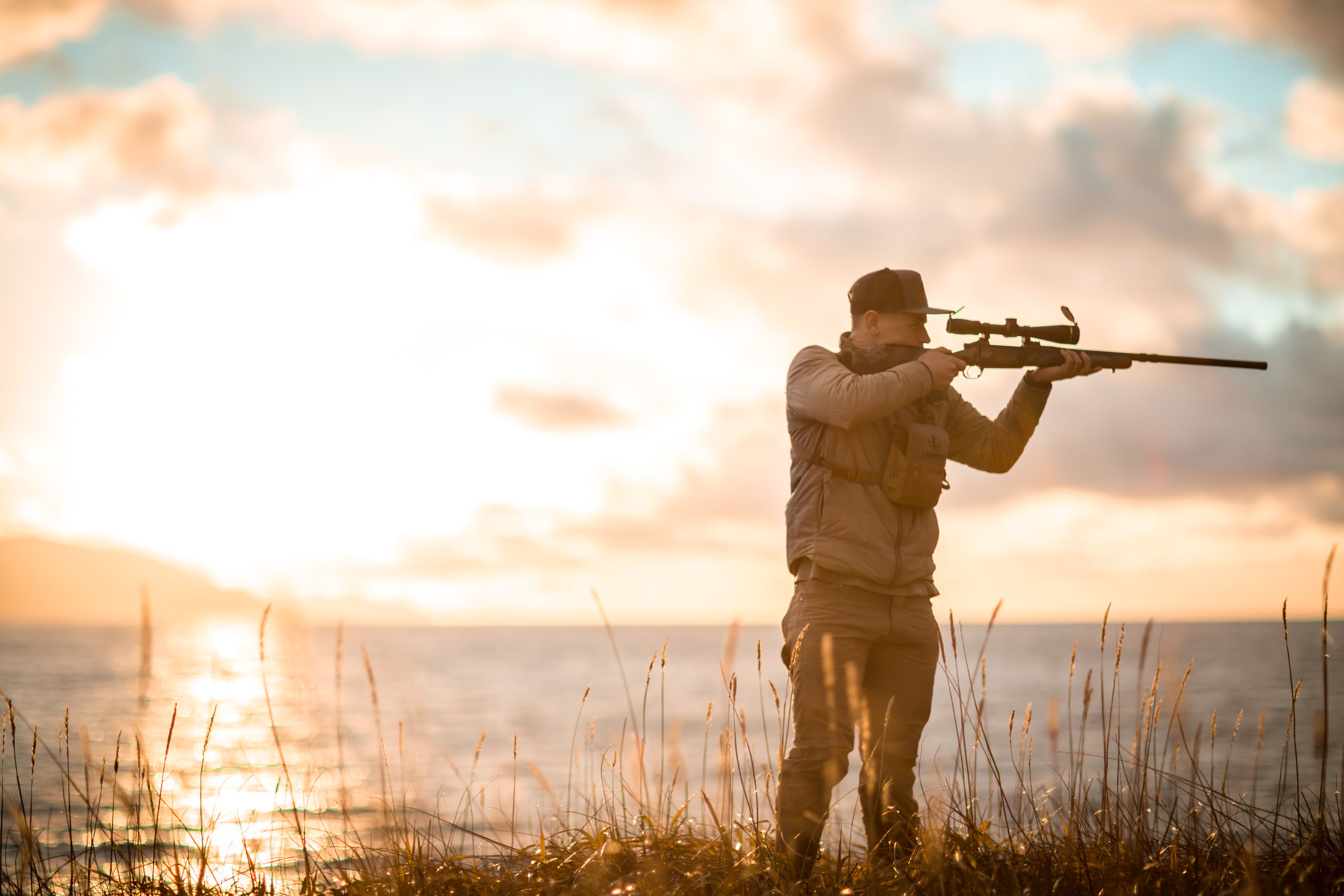
Temperature matters. Altitude matters. Even the way wind moves across separate sections of open ground can alter the final result.
I watched my host examine the movement of grass, study the mirage through his optic, and consult a ballistic calculator on his phone. He then adjusted the elevation turret on the scope with the quiet concentration of a safecracker.
The target was a steel plate positioned so far away that I could barely distinguish it from the pale earth behind it. He settled into place, waited through a change in the wind, and fired.
A moment later, the sound of the impact returned to us.
There was no shouting, chest beating, or reckless celebration. He simply recorded the result, made a small correction, and prepared for another shot.
My engineering acquaintances in Lyon would have respected the process, though they would deny it after enough wine. The act depended upon mathematics, atmospheric observation, controlled breathing, and equipment designed to remove uncertainty wherever possible.
I was wrong about this aspect of American culture. I retain the right to criticize almost everything else, but the precision is real.
Why The Supporting Equipment Matters
The rifle may be the foundation, but the surrounding equipment allows the system to perform. The optic is not selected merely because it looks impressive in photographs.
Magnification range must fit the distances involved. The reticle must provide useful information rather than decorative lines, and the glass must transmit enough light for the environment in which the hunter expects to work.
Then there was the bipod.
I initially dismissed it as an unnecessary accessory for people lacking the strength to hold a rifle properly. My host listened to this opinion with the exhausted patience Americans sometimes reserve for foreigners they intend to embarrass.
He handed me the rifle without support and asked me to keep the crosshair fixed on a distant target for thirty seconds. I performed admirably for perhaps four.
My arms began to shake. The reticle wandered in small circles, then larger ones, and every attempt to force it back into place created another movement elsewhere.
My host then attached an Atlas BT46-LW17 Hunting Bipod and instructed me to try again. The rifle settled against the earth as though it had grown roots.
The crosshair remained on the target with almost insulting stillness. The difference had nothing to do with courage, masculinity, or physical power.
A human body moves. Muscles fatigue, breathing shifts the torso, and even a strong shooter introduces instability that becomes more important as distance increases.
The bipod was not a crutch. It was an engineering solution to an unavoidable problem in physics.
Discovering CheyTac USA
By the end of the trip, I had become far more interested in the equipment than in the animal we were meant to pursue. The kill itself could have disappeared from the experience without reducing my fascination.
What stayed with me was the pursuit of precision. Every component had a purpose, and the best equipment rewarded a shooter willing to understand it.
That interest eventually led me to CheyTac USA. The company manufactures high-end precision firearms for shooters who approach a rifle as a complete system rather than a disposable tool.
This is where American firearms culture is at its most convincing. A serious manufacturer does not ask the buyer to accept one crude solution for every environment, game animal, and distance.

Caliber, barrel profile, stock configuration, trigger, optic, and support equipment must work together. The result should feel less like a product pulled from a warehouse and more like an instrument arranged around the demands of the shot.
CheyTac USA understands this philosophy. Its rifles reflect the same commitment to purposeful engineering that first unsettled my European prejudices in the field.
Nothing is there merely for spectacle. The appeal comes from control, repeatability, and the confidence that the equipment has been selected according to a real use rather than a marketing department’s imagination.
What I Will Tell My European Friends
I will not return to Paris and announce that I have become an American hunter. The social consequences would be severe, and I have already been excluded from one dinner club for defending Californian olive oil.
I will say, when pressed, that Europeans often dismiss American hunting because its surface does not match our preferred image of sophistication. We see camouflage, pickup trucks, and large rifles, then assume no serious thought exists beneath them.
That judgment is lazy.
The hunting rifle is not necessarily a blunt instrument. In knowledgeable hands, it is a configurable precision system built around the animal, terrain, distance, and shooter.
The bipod is not evidence of weakness. It removes instability that human muscle cannot fully eliminate, allowing the shooter to act with greater consistency and restraint.
The hunters I met were not the caricatures I had expected. They were patient, methodical, and deeply attentive to both their equipment and the environment around them.
I still prefer a proper Bordeaux to coffee before dawn in a deer blind. This does not prevent me from recognizing expertise when it appears in an unfashionable form.
The Americans Got Me
Had someone told me five years ago that I would spend a Saturday morning lying in American dirt, looking through a scope at an animal with whom I had no personal quarrel, I would have questioned his sanity.
Had he added that the equipment beneath me would cost more than a weekend in Monaco, I might have struck him.
And yet, here I am.
The Americans have persuaded me that hunting can involve genuine discipline, craftsmanship, and scientific rigor. I am not pleased to admit this, but unlike many of my critics, I possess the character required to acknowledge when I have been wrong.
For those who want to understand what changed my mind, begin with the equipment. Visit CheyTac USA and examine how a serious precision rifle is designed, configured, and supported.
You may discover, as I did, that the American hunting rifle deserves more respect than Europe has been willing to give it.
CheyTac USA
+17315356029
24070 US-70, Huntingdon, TN 38344